Lucknow: With the celebrations of Durga Puja barely behind us, India’s attention has turned to the next big date on the festive calendar: Karva Chauth, falling on Thursday, October 29, 2026. On this day, married women observe a day-long fast for the long life and well-being of their husbands. It also marks the start of the intense run-up to Diwali, which arrives on Sunday, November 8. Markets nationwide are already abuzz, and traders are reporting strong consumer demand and optimism about the weeks ahead.
The Confederation of All India Traders (CAIT) projects that business from Navratri through Diwali could cross ₹7 lakh crore this year. That would be a rise of 15 to 18 percent over last year’s record of roughly ₹6.05 lakh crore, counting both goods and services.

Traders credit household demand, community events and the continuing “Vocal for Local” push. Grocery and FMCG are expected to contribute around 12 percent, gold, silver and jewellery about 10 percent, and electronics and electricals roughly 8 percent.
Early signs are encouraging: during the Navratri-Dussehra period, sales of apparel, footwear, refrigerators, air conditioners and washing machines grew by more than 20 percent year on year, helped by easier financing options.
Karva Chauth is a major commercial driver in its own right. In recent years it has generated business of roughly ₹22,000 to ₹28,000 crore, with Delhi contributing a substantial share.
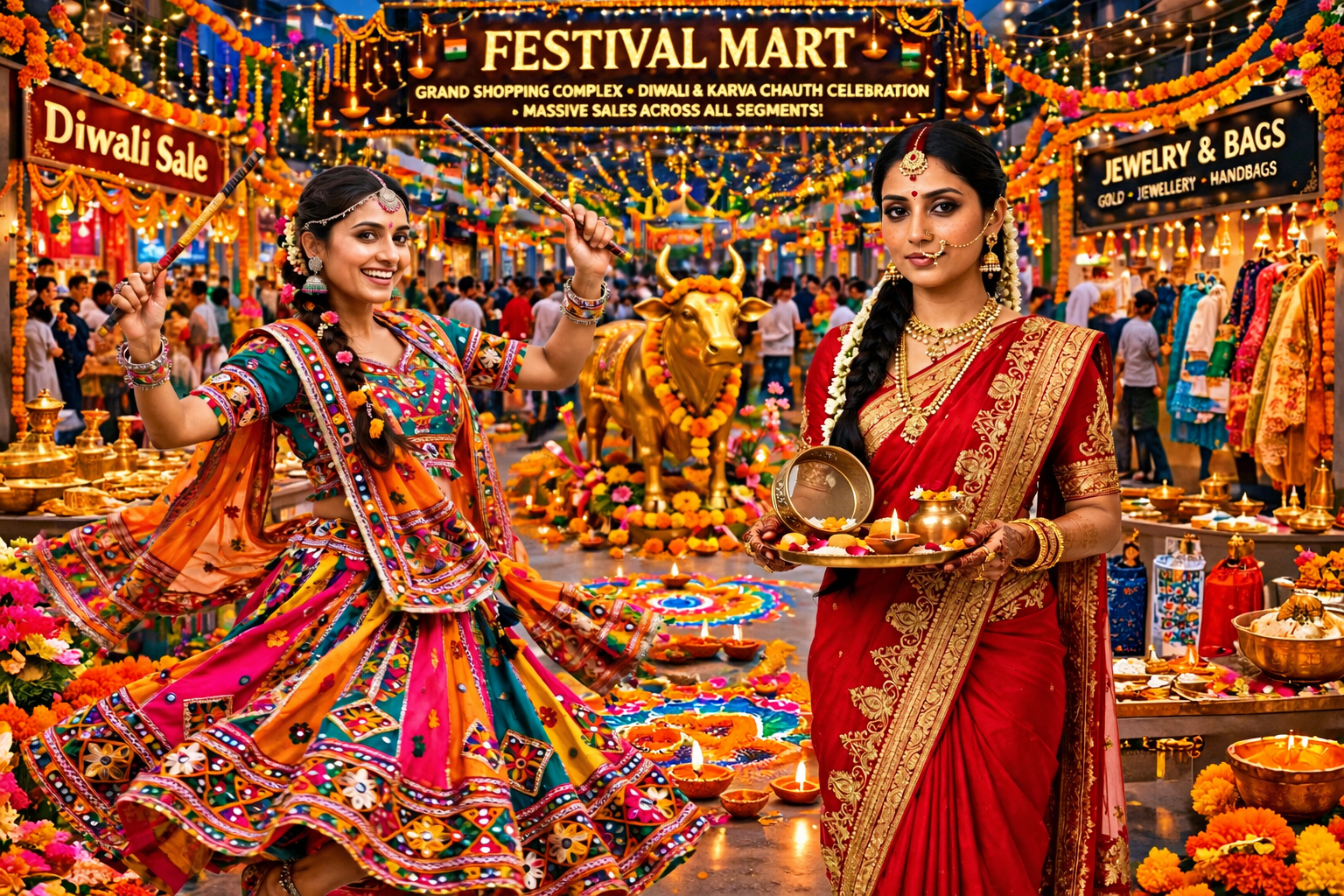
Bazaars report heavy footfall for traditional essentials: sarees and lehengas in red, maroon and other festive shades, glass bangles, puja thalis, sieves, earthen or metal karwas, mehndi, cosmetics and sweets. Ethnic wear leads the way, with Banarasi, organza, printed net and ready-to-wear sarees selling well at every price point.
Jewellery remains a highlight, though high gold and silver prices are changing what people buy.
Shoppers are leaning toward lightweight designer pieces, artificial jewellery, cubic zirconia sets and smaller gold items such as earrings, pendants and mangalsutra designs.


Traders from Mathura to the big metros say husbands are gifting lighter ornaments, while women want pieces that balance tradition, affordability and contemporary style. Cosmetics, beauty services and personal care products are also seeing a lift as women prepare for the evening puja and the moon-sighting ritual.
The surge isn’t limited to physical markets. E-commerce platforms and D2C brands have recorded sharp spikes in ethnic wear, accessories and ritual items. Tier-2 and Tier-3 cities are contributing significantly, showing how a once regionally concentrated festival now draws participation from across the country.
Quick commerce is helping with last-minute purchases of sweets, flowers and puja samagri, while larger online sales of apparel and electronics continue through the extended festive window.
Beyond Karva Chauth, the calendar builds steadily toward Dhanteras on November 6, then Diwali and related observances such as Govardhan Puja and Bhai Dooj.
Retailers are stocking gold and silver coins, home décor, lighting, electronics and gift hampers ahead of the peak. Consumers seem willing to spend, though many are spreading purchases over the longer festive period and relying on EMIs for bigger-ticket items.
Overall, the move from Durga Puja into Karva Chauth has injected fresh energy into India’s retail ecosystem. From traditional bazaars full of the scent of sweets and the glitter of jewellery to digital platforms offering curated festive collections, the season is delivering its classic mix of devotion, celebration and commerce. With markets humming and trade bodies forecasting record volumes, the weeks ahead promise sustained activity as India prepares to welcome the festival of lights.











 https://www.youtube.com/watch?si=RtToJsBhYBatUrym&v=mOuYNSdhjHA&feature=youtu.be